We live by faith far more than we live by proof.
We trust that the sun will rise tomorrow, though there is no deductive necessity that it must. We believe our memories are real, even though we’ve never stepped outside our minds to verify them. We accept that our parents are truly our parents, though we never witnessed our own births- and even DNA tests, like all human constructs, are subject to fallibility.
Yet we build our lives on these foundations without hesitation. We eat food prepared by unseen hands. We enter relationships with people whose hearts we cannot scan. We board planes trusting pilots we’ve never met. No one calls this irrational. We call it life.
The demand that belief in God must meet the impossible standard of empirical or mathematical certainty is not only inconsistent- it is unsustainable. If we were to reject all beliefs that lacked irrefutable evidence, we would descend into a radical skepticism that would make daily existence impossible. This is belief ad absurdum.
The Smoke That Signals the Fire
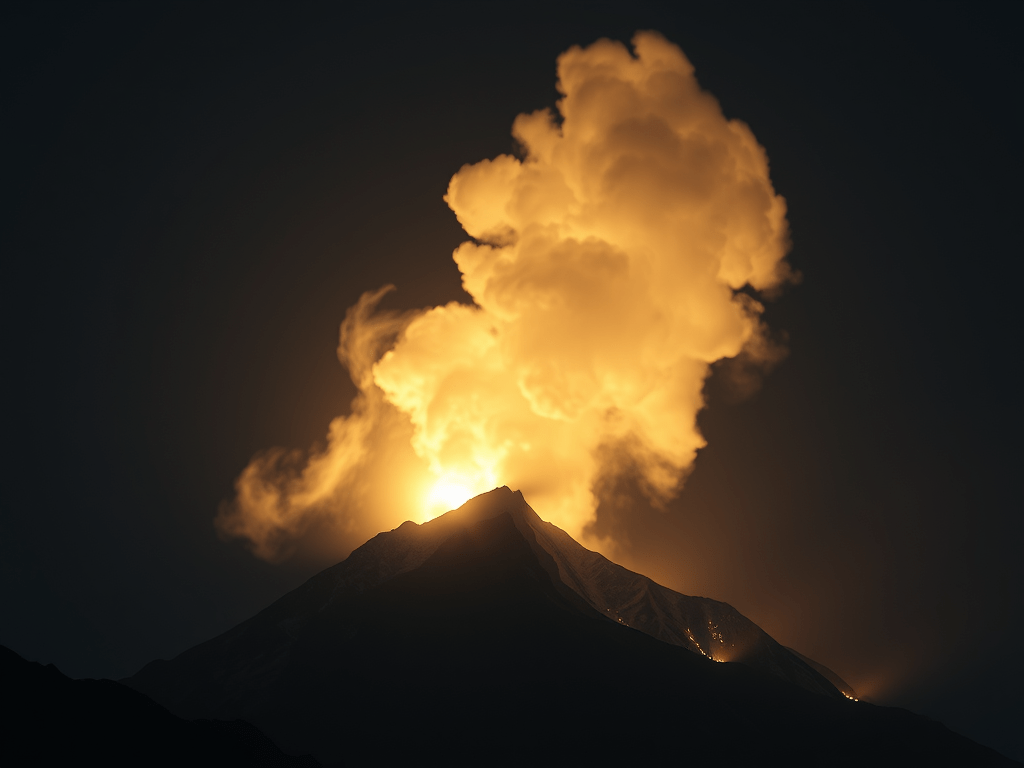
The evidence of God is not found in a sterile laboratory but in the lived fabric of reality. It is not the fire itself, but the smoke—the signs (āyāt) that rise from creation and conscience, directing the soul toward its Source.
We see it in the impossible fine-tuning of the universe, in the irrepressible yearning for transcendence, in the moral compass that points beyond self-interest. We see it in the moments of silence when the heart knows there is more. These are not delusions- they are recognitions. The Qur’an does present God as hidden, but also as the Most Evident (al-Ẓāhir). What is required is not new proof, but the removal of internal veils.
As Allah says:
“We will show them Our signs on the horizons and within themselves until it becomes clear to them that this is the truth.” (Qur’an 41:53)
Faith, Evolution, and Epistemological Grounding
Contemporary thinkers often claim that morality can be explained by evolutionary advantage. Altruism becomes a reproductive tactic. Ethics, a trick for social cohesion. But if our moral intuitions are just neural adaptations for survival, then we have no grounds to claim that any action is truly right or wrong—only that it’s strategically useful.
Yet we do believe certain things are truly wrong. We believe genocide is evil even if it “benefits” a group’s survival. We don’t see morality, yet we are willing to kill and die for it. This makes one thing clear: if morality were just an evolutionary tool, then its logical conclusion would be amorality. But unless one is ready to claim that murder is permissible when it enhances fitness, that conclusion is clearly absurd.
Therein lies the contradiction: modern man denies the metaphysical foundation of morality while continuing to speak, act, legislate, and protest as if moral truths are real. It is cognitive dissonance elevated to culture.
But this is not a new disease. The demand for proof over truth is ancient. Allah declares:
“Even if We sent down to them the angels, and the dead spoke to them, and We gathered everything before them face to face—they still would not believe, unless Allah willed. But most of them are ignorant.” (Qur’an 6:111)
The problem is not a lack of signs- it is the internal war to suppress them. The rejection of God is not born from pure reason but from a deeper refusal. To accept God is to surrender, and surrender is a threat to the self that wants to remain god.
Conclusion: The Leap That Is Not a Leap
To believe in God is not to leap into the irrational- it is to step into the more-than-rational. It is to admit that not all truths are test-tube truths. That some things—like love, beauty, duty, and God- are real not despite being unseen, but because they are the things most deeply seen with the heart.
Faith is not blindness. It is clarity. It is the courage to recognise that fire exists because we smell the smoke. That the unseen is not unreal. And that the soul already knows what the ego tries to forget.
“Is it not time for those who believe, that their hearts should become humbly submissive at the remembrance of Allah and what has come down of the truth?” (Qur’an 57:16)
 Engraved Light
Leave a comment