Introduction
In the modern world, where personal autonomy is often prized above all else, religious prohibitions are frequently misunderstood as arbitrary restrictions—rules imposed from above to control desire or suppress freedom. In Islam, however, what is haraam—that which is forbidden—is not defined by human instinct, social tradition, or clerical whim. It is defined by God, and only God. These prohibitions are not random, but rooted in wisdom, aimed at preserving what is sacred: the dignity of the body, the balance of society, the clarity of worship, and the integrity of truth.
At the heart of this framework lies a single verse in the Qur’an—Surah Al-A’raaf, Ayah 33—which outlines the core categories of the forbidden. In one sentence, it summarises the fundamental moral red lines that should not be crossed, not because they always lead to visible harm, but because crossing them is a betrayal of the spiritual architecture upon which life is meant to rest.
This article explores each of these five categories—indecency, failure of duty, unjust transgression, association of partners with God, and speaking on God’s behalf without knowledge—through the lens of Qur’anic language, Islamic theology, and their relevance to a broader moral and human context. Whether you are Muslim or simply seeking to understand Islamic ethics, this verse offers not just religious law, but a principled vision of how sacred boundaries structure a meaningful life.
N.B. This article does not discuss dietary laws
The chapters of what is haraam
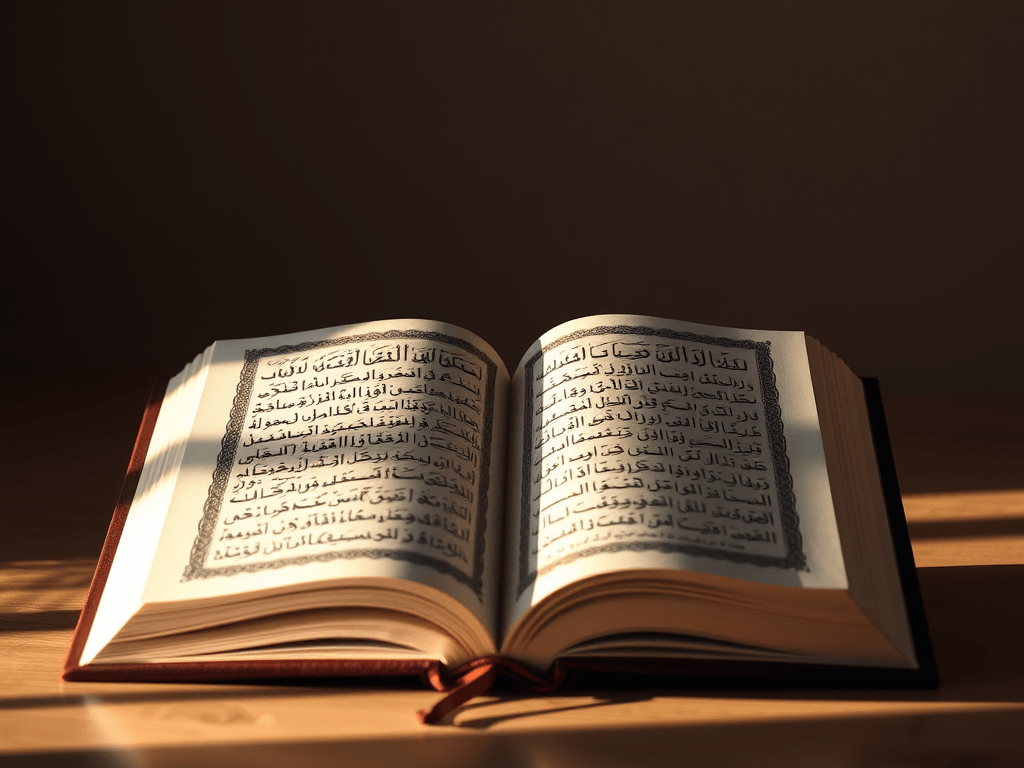
In Surah Al-A’raaf, verse 33, the Qur’an articulates a concise yet profound list of moral boundaries:
“Say: My Lord has only forbidden indecencies—what is apparent of them and what is concealed—and sin, and transgression without right, and that you associate with Allah that for which He has not sent down authority, and that you say about Allah that which you do not know.” (Qur’an 7:33)
This is not a list of arbitrary taboos. It is a divine architecture of restraint, drawn not to control people, but to preserve what is sacred in human life—dignity, trust, justice, truth, and reverence. Each prohibition is a guardrail against corruption, not just of the individual, but of the society and the soul. For Muslims, it sets the boundary of what is haraam, a term often translated as “forbidden,” but more accurately understood as “inviolable.” For others, it reveals Islam’s moral structure—not legalistic, but deeply principled.
Indecency – The Corruption of Intimacy
The first prohibition mentioned is fawahish, translated as “indecencies,” and explicitly including both public and private acts. This refers foremost to sexual immorality: anything that leads toward premarital sex, adultery, or sexual exposure. The Qur’anic concern here is not merely with physical acts, but with the degradation of the self. Islam views sexual desire not as shameful, but as sacred—and because it is sacred, it must be protected.
Sexuality, in Islamic thought, is a force meant to unite two individuals within the moral covenant of marriage. It is not casual. It is not disposable. It is not a mere exchange of pleasure. It is a merging of souls with legal, emotional, and spiritual weight. To remove it from that frame is to dishonour it. One may object that many engage in these acts and see no visible consequences—but the Qur’anic response is not utilitarian. Harm is not always visible. What matters is the breach of what God has made sacred.
Neglecting Obligations – A Failure of Trust
The second category is ithm, a word that carries the meaning of sin, but more precisely points to the failure to fulfil rights. In Islam, duties fall in two major categories: those owed to God, and those owed to fellow human beings. Obligations to God include prayer, fasting, almsgiving, pilgrimage, and maintaining sincere belief. These rituals are not mechanical—they are means of anchoring the self to truth, humility, and discipline.
But religious life is not confined to rituals. It spills into social responsibility. Parents, neighbours, colleagues, strangers—all carry rights that must be honoured. Failing to meet these obligations, whether spoken or unspoken, is a form of betrayal. It is not enough to “do no harm.” The Islamic ethic demands that you give others their due. Justice is not just avoiding evil—it is fulfilling good.
Transgression Without Just Cause – The Abuse of Power
Next comes baghy bi-ghayr al-haqq—“transgression without right.” Islam is not a pacifist religion. It acknowledges that force, conflict, and even war can be moral when they are responses to injustice. But any use of power without justification becomes oppression.
Not all rebellion is noble. Not all struggle is righteous. One may fight for ego, for greed, or to dominate others—and cloak it in lofty slogans. Islam strips this illusion away. What matters is not the appearance of a cause, but whether the cause is just. Power is not haraam. But using it unjustly is. And in this age of endless ideological conflict, the principle holds: force without accountability is forbidden.
Shirk – Placing What Is Created Where Only the Creator Belongs
The fourth and most serious prohibition is shirk—associating partners with God. In Islamic theology, God is One: indivisible, eternal, without peer or intermediary. To worship others, to call upon saints, ancestors, or imagined deities, or to give ultimate authority to anything besides God is to commit shirk. But this is not simply a theological mistake. It is described in the Qur’an as dhulm ‘azim—a “great oppression.”
“Indeed, associating others with Allah is a great injustice.” (Qur’an 31:13)
Why oppression? Because in Arabic, dhulm means to place something where it does not belong. Worship, fear, trust, and hope—these belong to God alone. Giving them to another is a lie, a misplacement of the deepest truths. Even lying itself is not directly banned in the Qur’an as a general principle. But shirk is called the ultimate falsehood. And in broader terms, it extends beyond idols to anything that captures your ultimate loyalty—money, status, ideology, the self. Whenever the created is treated like the Creator, the order of existence is violated.
Speaking Without Knowledge – Usurping God’s Authority
Finally, the verse forbids saying about God that which you do not know. This is perhaps the most insidious danger: to claim divine sanction for what God has not revealed. Declaring something haraam or halal based on personal opinion, social pressure, or inherited prejudice is not minor—it is a form of fabrication.
This includes religious authoritarianism, where scholars or leaders invent prohibitions to control others. It also includes asceticism disguised as piety: declaring beauty, adornment, or worldly joy as spiritually impure.
The Qur’an addresses this distortion directly:
“Say: Who has forbidden the adornment of Allah which He has produced for His servants and the good things of provision?” (Qur’an 7:32)
God does not forbid beauty. He forbids misuse. Asceticism is not a virtue when it is built on fabricated rules. The Qur’an rebukes those who invent claims in God’s name:
“Say: Are you teaching Allah your religion, while Allah knows what is in the heavens and the earth?” (Qur’an 49:16)
To claim to speak for God without knowledge is not zeal—it is arrogance. It leads to extremism, cruelty, and the hollowing of religion into control.
Conclusion: The Ethics of Sacred Boundaries
Surah Al-A’raaf 33 is not merely a list of forbidden acts. It is a declaration of what God has made sacred: intimacy, justice, truth, worship, and knowledge. These boundaries are not drawn to suppress, but to elevate. They do not deny the body—they dignify it. They do not erase power—they restrain it. They do not silence inquiry—they purify it.
Islam does not base its prohibitions on cultural norms or fluctuating social consensus. It defines haraam in relation to what violates the order God established in creation—an order in which desire is disciplined, rights are honoured, and divine authority is not usurped.
And in Surah Al-Furqan, the Prophet is made to lament:
“And the Messenger will say: O my Lord, my people have abandoned this Qur’an.” (Qur’an 25:30)
To abandon it is not only to neglect its verses—but to misapply them, or reduce them to cultural identity while ignoring their substance. Whether you are Muslim or not, this verse demands reflection. It calls not just for belief, but for reverence. Not just ritual, but discipline. Not just morality, but precision.
In a world that mistakes freedom for indulgence, and piety for deprivation, this verse returns us to balance. Haraam is not a wall—it is a gate. A gate that guards what is most worth protecting.
 Engraved Light
Leave a comment