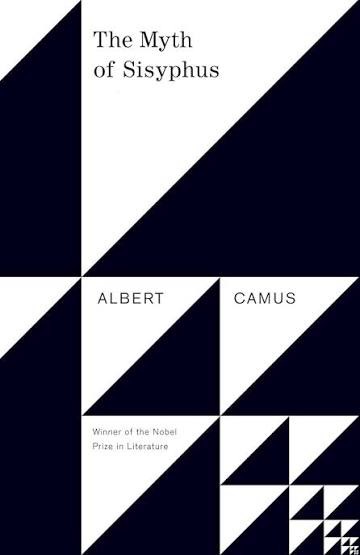
Albert Camus (1913-1960) writes the Myth of Sisyphus. In this absurd book (which is meant as a compliment of coherence for Camus ideas), he explores the idea of how life has no purpose, and the truly ‘absurd’ man accepts this. His works can be seen when he totally divorces his hope, ideals, and actions from any sort of hope. He accepts the brute fact of the absurdity of life and explicates how a truly absurd man ought to live, and what his attitude to this reality should be.
1. Where does Camus locate the precise moment the absurd is born
The absurd is born at the point of realisation (lucidity) that the task one is undergoing has no real purpose; there is no end goal that one will personally achieve from the task that they are undergoing. Camus uses the example of an actor, who takes up a life and a personality for a mere three hours during a play, to kill that character at the end of said play.
He draws a parallel to life, positing that if we are all to die, our existences bear witness from an internal witness that life, due to the certainty of death, is ‘absurd’. One must be loyal (exhibit fidelity) to the absurd, and not commit suicide.
The absurd is born as an explication of a ‘judgement of the body, which is as useful as one of the mind’. A feeling is being described throughout Camus’ treatise on the absurd.
2. Why does Camus reject both suicide and transcendence as responses to the absurd.
Camus describes the absurd as a deity, a god. This god that is absurd is clear in what it refers to. It has no goal, no laws, no rules. For it to command suicide would be absurd as it commands naught.
The title of the book is ‘the myth of Sisyphus’. Sisyphus is a character from Greek mythology who is punished by the gods, due to his insolence, to roll a boulder up a mountain for all eternity. As it reaches the top of the mountain, it rolls back down and Sisyphus begins rolling it up anew.
Sisyphus does not commit suicide. Camus asks us to ‘imagine Sisyphus happy’. Why does Camus reject both suicide and transcendence? Because he rejects imagination except for that which is happy. Happiness, according to Camus, must be divorced from hope. We must somehow reject both the True Divine, and suicide, learning to be happy with the absurd.
One must be loyal to the absurd, allowing the lucidity of its existence to prevent us from committing suicide.
3. What does it mean to imagine Sisyphus happy
What it means to imagine Sisyphus happy is to reject reality. To embrace absurdity. How can one believe that Sisyphus is happy when he is doomed to eternal fruitlessness. His works achieve naught, his labour is endless.
It means to accept a world in which one lives their life in total confusion: not an imaginary intellectualism that Camus tries to hint at.
Imagining divine punishment of any sorts as one that can be received with a happy attitude is mere fantasy.
Al-Mu’minun 23:115
أَفَحَسِبۡتُمۡ أَنَّمَا خَلَقۡنَٰكُمۡ عَبَثٗا وَأَنَّكُمۡ إِلَيۡنَا لَا تُرۡجَعُونَ
Then did you think that We created you uselessly and that to Us you would not be returned?”
This is my response to deny the metaphysical claims of the divinity of the ‘absurd’ as presented by Camus. May God accept it and increase my understanding of his scripture. Amen.
 Engraved Light
Leave a comment