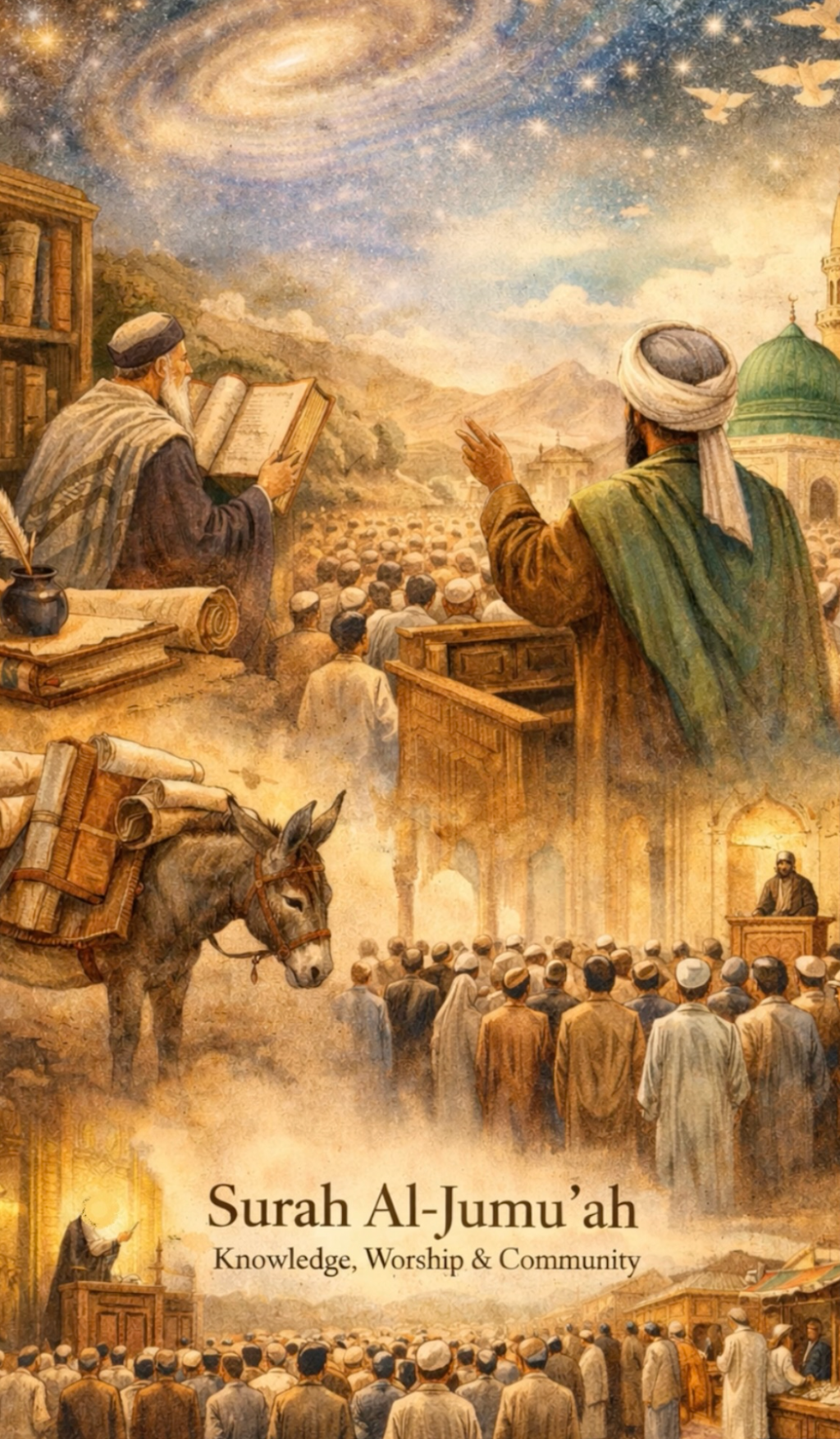
بِسۡمِ ٱللَّهِ ٱلرَّحۡمَٰنِ ٱلرَّحِيمِ
Surah Jum’uah is a surah that was revealed in the madani period of prophethood, after the prophet Muhammad صلى الله عليه وسلم had to migrate from the city of Makkah to Medinah, which was originally called ‘Yathrib’. This surah begins, as is common in the ‘musabbahaat’ (glorifiers) surahs of the quran, with a glorification of the Almighty, following an address to the Jewish community of Medinah, ending with a societal command of upholding the jum’uah (Friday) prayer as the Prophet’s newfound political power in Medinah with a true community of Believers was established, and this Abrahamic tradition of meeting once a week as was the Sabbath for the Jews, was able to be established in its true form.
I will provide the Arabic text, and the Sahih International translation.
يُسَبِّحُ لِلَّهِ مَا فِى ٱلسَّمَـٰوَٰتِ وَمَا فِى ٱلْأَرْضِ ٱلْمَلِكِ ٱلْقُدُّوسِ ٱلْعَزِيزِ ٱلْحَكِيمِ ١
Whatever is in the heavens and whatever is on the earth is exalting Allāh, the Sovereign, the Pure, the Exalted in Might, the Wise.
- This ayah refers to the Quranic concept of creation glorifying God. ’سبحان الله’ (subhanallah) is the infinitive of the verb used in the verse. It refers to declaring the Almighty free from any error. There is a great sign in this. The universe, nature, and humans alike all declare God’s creation not just imperfect, but glorify it. He has perfected all that he has created as stated in (Q:32:7). He is the holy (pure) king who is of great might and truly wise.
هُوَ ٱلَّذِى بَعَثَ فِى ٱلْأُمِّيِّـۧنَ رَسُولًۭا مِّنْهُمْ يَتْلُوا۟ عَلَيْهِمْ ءَايَـٰتِهِۦ وَيُزَكِّيهِمْ وَيُعَلِّمُهُمُ ٱلْكِتَـٰبَ وَٱلْحِكْمَةَ وَإِن كَانُوا۟ مِن قَبْلُ لَفِى ضَلَـٰلٍۢ مُّبِينٍۢ ٢
It is He who has sent among the unlettered [Arabs] a Messenger from themselves reciting to them His verses and purifying them and teaching them the Book [i.e., the Qur’ān] and wisdom [i.e., the sunnah] – although they were before in clear error –
- This ayah speaks to the responsibility of the recitation of God’s book the prophets are endowed with. Specifically mentioned here is the prophet Muhammad صلى الله عليه وسلم. He was sent among the ‘أميين’ (ummiyyeen). This was a derogatory term coined by the Jews for the Arabs. The Jews were a nation of scribes and with a long intellectual tradition. Their rabbis are called ‘أحبار’ (ahbaar) which has in its meaning ‘ink’ (due to the plethora of ink used by the Jews for their literature). An observant reader will realise that this wording points to a Jewish audience. The job of the prophet is mentioned as teaching the two main parts of The True Religion: The Law, and The Wisdom. It is mentioned that these Arabs, owing to not having a messenger sent to them since the time of Abraham صلى الله عليه وسلم (estimated to be a period of 3,500 years), had been in a great misguidance before this. Without The Light of God, they were unable to walk The Straight Path.
وَءَاخَرِينَ مِنْهُمْ لَمَّا يَلْحَقُوا۟ بِهِمْ ۚ وَهُوَ ٱلْعَزِيزُ ٱلْحَكِيمُ ٣
And [to] others of them who have not yet joined them. And He is the Exalted in Might, the Wise.
- God mentions that this messenger, was sent to the other communities as well. It is clear that the reference is to the Jews directly, though it also includes in it the Christians, the Polytheists, and anyone who receives the good news of the coming of The Prophet Muhammad صلى الله عليه وسلم as he is The Seal of the Prophets; he is the last one on to be sent in a long tradition of Prophethood. God mentioned that he is powerful and mighty, though he uses it always with the other mentioned quality at the end of the verse: his being The Wise. Of course he would be powerful, he created the entire universe that glorifies him. Of course he would be The Wise, as unto God go all good names.
ذَٰلِكَ فَضْلُ ٱللَّهِ يُؤْتِيهِ مَن يَشَآءُ ۚ وَٱللَّهُ ذُو ٱلْفَضْلِ ٱلْعَظِيمِ ٤
That is the bounty of Allāh, which He gives to whom He wills, and Allāh is the possessor of great bounty.
- The bounty mentioned is the bounty a prophet. To have the teachings of the Mighty Prophets is one of God’s greatest bounties. He gives this bounty to whomsoever he wills. God is abundant. He owns the entire universe and creates more.
مَثَلُ ٱلَّذِينَ حُمِّلُوا۟ ٱلتَّوْرَىٰةَ ثُمَّ لَمْ يَحْمِلُوهَا كَمَثَلِ ٱلْحِمَارِ يَحْمِلُ أَسْفَارًۢا ۚ بِئْسَ مَثَلُ ٱلْقَوْمِ ٱلَّذِينَ كَذَّبُوا۟ بِـَٔايَـٰتِ ٱللَّهِ ۚ وَٱللَّهُ لَا يَهْدِى ٱلْقَوْمَ ٱلظَّـٰلِمِينَ ٥
The example of those who were entrusted with the Torah and then did not take it on is like that of a donkey who carries volumes [of books]. Wretched is the example of the people who deny the signs of Allāh. And Allāh does not guide the wrongdoing people.
- As is common in the Quran, God keeps the literary taste of the Arabs in account. It is preferred to paint a picture in one’s mind to teach concepts. God describes these Jews with a long literary tradition and a huge library of divine literature as donkeys. The cultural implications of such an example are clear. God is very angry with the Jews given that their gift of the bounty of God (of a long tradition of prophets) was replied to with murder, and the alteration of God’s laws. These donkeys are described as carrying pages upon pages of books. They gain no benefit from them. The exclamation is made using the Arabic phrase ‘بئسما’ (bi’samaa)! This carries connotations of extreme anger and displeasure. God refers to his law of guidance, and says that he does not guide such a wrongdoer people. They usurp the rights of others by taking interest. They have killed messengers sent by God. They have spread a blatant lie about Mary, and denied the Messiah upon his coming.
قُلْ يَـٰٓأَيُّهَا ٱلَّذِينَ هَادُوٓا۟ إِن زَعَمْتُمْ أَنَّكُمْ أَوْلِيَآءُ لِلَّهِ مِن دُونِ ٱلنَّاسِ فَتَمَنَّوُا۟ ٱلْمَوْتَ إِن كُنتُمْ صَـٰدِقِينَ ٦
Say, “O you who are Jews, if you claim that you are allies of Allāh, excluding the [other] people, then wish for death, if you should be truthful.”
- God mentioned how the Jews believed that their bounty with God in the hereafter is secured. They are his chosen people. Why would he ever punish them? See Q5:18 for the Quran’s response to this belief as laid out in its tribal (racist) rooted vices in Q2:94. God says, that if these people are truly expecting only a good outcome for themselves in the hereafter, they should wish to die. That is, they should truly long for it as what is this life compared to the next? They should want to enter heaven as soon as possible!
وَلَا يَتَمَنَّوْنَهُۥٓ أَبَدًۢا بِمَا قَدَّمَتْ أَيْدِيهِمْ ۚ وَٱللَّهُ عَلِيمٌۢ بِٱلظَّـٰلِمِينَ ٧
But they will not wish for it, ever, because of what their hands have put forth. And Allāh is Knowing of the wrongdoers.
- God denies that such longing is even possible. They will never deny it. God knows what he creates and the reality is, no human being can deny the fear of death. Though he may amuse himself and be deceived by the Devil, for the disbeliever, this should be his greatest concern. What is to be said of the state of a man who finds his health deteriorated, as he struggles to breathe and calls upon his Lord, perhaps as Pharaoh did, only to be closed off from God’s mercy because of his denial to submit. This is the certainty of death which cannot be denied. It leaves none. God is aware of all wrongdoers. Not a single man will be left without judgment on the final day. The Quran is replete in reminder of both the punishment and the reward.
قُلْ إِنَّ ٱلْمَوْتَ ٱلَّذِى تَفِرُّونَ مِنْهُ فَإِنَّهُۥ مُلَـٰقِيكُمْ ۖ ثُمَّ تُرَدُّونَ إِلَىٰ عَـٰلِمِ ٱلْغَيْبِ وَٱلشَّهَـٰدَةِ فَيُنَبِّئُكُم بِمَا كُنتُمْ تَعْمَلُونَ ٨
Say, “Indeed, the death from which you flee – indeed, it will meet you. Then you will be returned to the Knower of the unseen and the witnessed, and He will inform you about what you used to do.”
- God orders the prophet to tell these Jews about the certainty of death, and the final day. This is what prophets do, which follows in line with the structure of this surah. They initially correct the concept of God for a nation. This is seen mostly in the early Meccan dialogues with the polytheists though the Quran also mentioned that these Jews committed the crime of shirk, calling ‘Uzayr’ the ‘Son of God’. This occurs in the beginning of the surah via the praise of the Almighty. Then, prophets remind a people about the hereafter. This culminates in the correct implementation of God’s Divine Law, termed Al-Kitaab earlier on in this surah. How evil a people to reject such a clear understanding.
يَـٰٓأَيُّهَا ٱلَّذِينَ ءَامَنُوٓا۟ إِذَا نُودِىَ لِلصَّلَوٰةِ مِن يَوْمِ ٱلْجُمُعَةِ فَٱسْعَوْا۟ إِلَىٰ ذِكْرِ ٱللَّهِ وَذَرُوا۟ ٱلْبَيْعَ ۚ ذَٰلِكُمْ خَيْرٌۭ لَّكُمْ إِن كُنتُمْ تَعْلَمُونَ ٩
O you who have believed, when [the adhān] is called for the prayer on the day of Jumuʿah [Friday], then proceed to the remembrance of Allāh and leave trade. That is better for you, if you only knew.
- Right on time. After the glorification of God, and the reminder of the day of judgement, the believing community is now addressed for Divine Law. This new nation of believers that now includes more weak believers, as well as the plague of hypocrisy. God reminds the believing nation of the importance of the Jum’uah gathering and its place as a Divine Law. They should take note from the Jews who did not fulfil this Law, and wasted the prayer. They are reminded that when the time for this prayer arrives, they must leave their trade. God asserts that ‘that is better for you’. No worldly gain is equivalent to the pleasure of the Almighty. If one must follow any part of the Divine Law, he must do so with proper due diligence, not allowing his desires to override the submission to it. Just as The Law was mentioned, as was The Wisdom.
فَإِذَا قُضِيَتِ ٱلصَّلَوٰةُ فَٱنتَشِرُوا۟ فِى ٱلْأَرْضِ وَٱبْتَغُوا۟ مِن فَضْلِ ٱللَّهِ وَٱذْكُرُوا۟ ٱللَّهَ كَثِيرًۭا لَّعَلَّكُمْ تُفْلِحُونَ ١٠
And when the prayer has been concluded, disperse within the land and seek from the bounty of Allāh, and remember Allāh often that you may succeed.
- The law’s spirit is expounded upon. Trade is not inherently evil. Rather it is part of the bounty of Allah. The Believers should take heed from this and understand that the bounty of the Lord is greater. They are reminded of the purpose of this prayer. For the remembrance of Allah, as are all prayers. They should remember, as is the case in my community not observed, that the sermon before the two units of prayer is an obligatory part of the whole ‘Friday Prayer’. To miss it is as though one were to only pray half of the daily dhuhr (midday) prayer. This is unacceptable. It should only occur if one is in a true dire emergency and can by no means attend this part of the prayer for him to present any sort of excuse before the Almighty.
وَإِذَا رَأَوْا۟ تِجَـٰرَةً أَوْ لَهْوًا ٱنفَضُّوٓا۟ إِلَيْهَا وَتَرَكُوكَ قَآئِمًۭا ۚ قُلْ مَا عِندَ ٱللَّهِ خَيْرٌۭ مِّنَ ٱللَّهْوِ وَمِنَ ٱلتِّجَـٰرَةِ ۚ وَٱللَّهُ خَيْرُ ٱلرَّٰزِقِينَ ١١
But [on one occasion] when they saw a transaction or a diversion, [O Muḥammad], they rushed to it and left you standing. Say, “What is with Allāh is better than diversion and than a transaction, and Allāh is the best of providers.”
- God reminds the believers of a time where they did not uphold the sanctity of this prayer, and left the Prophet of Allah standing, giving his speech. The prophet is told to remind The Believers that Allah is the one providing them. What he has is better for them. They should take heed from this merciful overlook at this time, but should remember the punishment of this hereafter that the nation addressed before them is reminded of.
 Engraved Light
Leave a comment